Lost Google Rankings? Common Causes and Practical Fixes
When fewer enquiries suddenly come through Google, it can feel like an emergency. Small businesses should not change everything at once, but first check whether the loss is real, technical, seasonal or only a tracking issue.
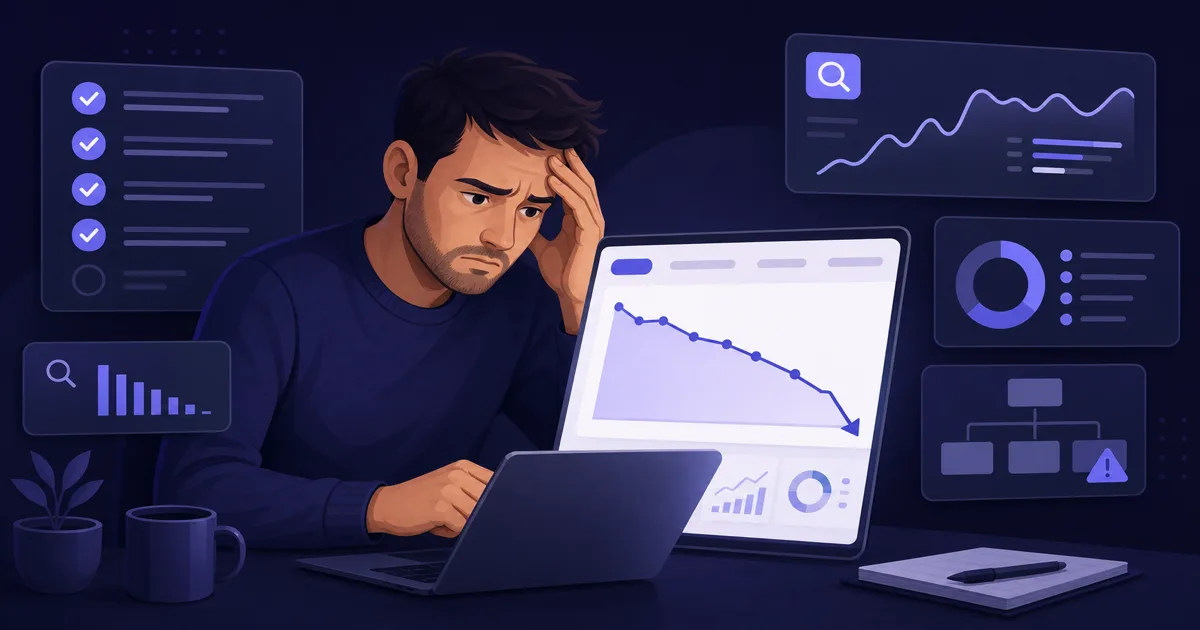
Did your Google ranking really drop?
Do not treat one bad day as a full SEO crisis. In Google Search Console, compare at least the last 28 days with the previous period: clicks, impressions, average position and affected queries. A real ranking loss usually appears in positions or impressions, not only in website visits.
Separate website traffic from Google Search traffic. Analytics can drop because tracking broke, a consent banner blocks more data or a campaign ended. Search Console is the better starting point because it reports performance in Google Search itself.
- compare the last 28 days in Search Console
- check affected pages and queries separately
- separate brand terms from generic keywords
- evaluate clicks, impressions and position together
Which technical issues can cost rankings?
Google lists technical issues as possible causes of search traffic drops: server availability, robots.txt problems, not-found pages, accidental noindex tags or pages that cannot be crawled correctly. For business owners this means the text is not always the problem. Sometimes a relaunch changed a URL, a redirect was missed or a plugin blocked indexing.
Use URL inspection for your important pages. Is the URL on Google? Are there crawling or indexing errors? Does the page open without redirect loops? After a website move, 301 redirects are essential. An old service page that now returns 404 will usually lose its signals.
- check noindex and robots.txt
- review 404 pages and redirects
- update and submit the sitemap
- test server errors, SSL and speed
Could a Google update be the reason?
Not every loss is caused by a mistake on your site. Google updates its ranking systems regularly; larger core updates and spam updates can shift visibility. The Google Search Central Blog publishes such updates, so compare the timing.
Do not rewrite everything immediately. Review quality first: does the page answer the search intent, show clear services, prices, locations, references and contact paths? Thin AI copy, generic advice and copied manufacturer text tend to become weaker over time.
Which content changes hurt visibility?
Ranking losses often follow well-meant edits: an old page was shortened, important headings disappeared, title and description became generic or several services were merged into one vague page. Google evaluates pages URL by URL. If “roof repair in Cologne” becomes “our services”, the page often loses clarity.
Compare the affected page with an older version from backup or a web archive. Were keywords, location signals, FAQs, internal links or specific service details removed? The fix is not simply more text, but better coverage of the query.
- do not weaken title and H1 unnecessarily
- do not delete or merge important service pages without a plan
- keep local terms and concrete examples
- check internal links from homepage and navigation
How do you spot manual actions or security issues?
In rare cases the issue is a manual action or a security problem. Google explains in the Manual Actions report that affected pages may rank lower or disappear from results. The Security Issues report shows warnings for malware, phishing or hacked content.
This matters especially for poorly maintained WordPress sites. Hidden spam pages, redirects or infected plugins can destroy visibility and trust. If there is a warning, fix not only the symptom but also updates, access data, backups and hosting.
Which steps help after a ranking loss?
Use a simple order: measure, narrow down, rule out technical issues, review content, then improve. Do not make ten changes at once, or you will not know what helped. Document dates, affected URLs, changes and Search Console values. After fixes, Google may need days to weeks to recrawl and reassess pages.
For small businesses, focus on the three to five most important pages first. SEO can be added to the managed packages at bezahlbare-webseite.de from €69/month. Serious SEO does not guarantee number one rankings; it checks causes transparently and improves the site step by step.
- prioritise top URLs by enquiries or revenue
- check Search Console and the live page
- fix technical errors and request indexing
- adapt content to search intent and local demand
- review results after 2 to 6 weeks
Frequently Asked Questions
Why did my Google ranking suddenly disappear?
+How quickly can rankings recover?
+Should I write new content immediately?
+Can a relaunch hurt rankings?
+Can Google Ads replace lost rankings?
+Website subscription — from €79/month
Custom web design, German hosting, maintenance and personal support in one monthly package.
Book a free consultation