Local SEO: How to Get Found in Your City
Someone googling "hairdresser near me" or "electrician Dortmund" isn't doing research — they want an appointment. These searches decide whether new customers end up with you or with the competitor two streets away. The good news: local SEO isn't rocket science, and the biggest levers cost diligence rather than ad budget. This guide walks you through it step by step.
How does local Google search work?
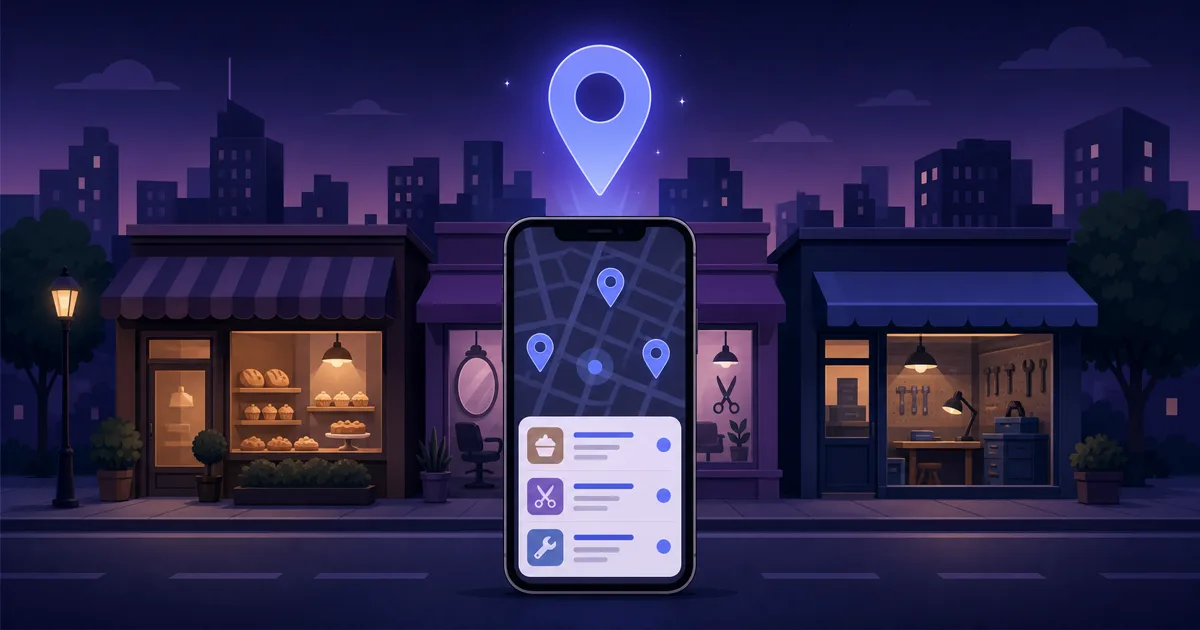
For searches with local intent, Google shows a map section with three highlighted businesses above the regular results — the so-called Local Pack or "3-pack". These three spots capture the majority of clicks and calls. Below them follow the classic organic results, where your website can rank.
Local SEO therefore plays on two fields at once: your Google Business Profile competes for the map, your website for the organic listings. Get both right and you can appear twice on one results page — and local searches carry high purchase intent: whoever searches now needs a provider now.
Which factors determine local rankings?
Google officially names three main factors for local results: relevance, distance and prominence. Relevance means: how well does your profile match the search? Complete, detailed information helps Google match your listing to the right queries. You can't influence the distance to the searcher — but you certainly can influence the other two factors.
Prominence, according to Google, draws among other things on the number of websites linking to your business and on the quantity and quality of your reviews. Important to know: you cannot buy a better position on Google — anyone promising you "guaranteed top spots in Maps" is not trustworthy. There is only solid work on the factors Google itself names.
Google Business Profile: the foundation
The free Google Business Profile (formerly "Google My Business") is the single most important lever in local SEO. A half-completed profile throws away visibility. Make sure these points are covered:
- Complete data: business name, address, phone number, website, opening hours — including special hours on public holidays
- The right primary category (e.g. "electrician" rather than generic "service provider") plus fitting secondary categories
- Add services and products as separate entries — they increase relevance for specific searches
- Your own photos: team, premises, work, vehicles — profiles with real photos are more convincing than stock images
- Regular posts (offers, news) show Google and customers that the business is active
Reviews: the underrated ranking factor
Reviews work twice over: they feed into prominence — Google itself says more positive reviews can improve rankings — and they decide whether searchers click on you. Between a business with 4.8 stars from 120 reviews and one with 3 reviews, most people choose without thinking.
The most practical approach: ask satisfied customers right after completing the job — in person, by email, or with a QR code on the invoice that leads straight to the review form. Reply to every review, including critical ones: factual, friendly, solution-oriented. Bought reviews, on the other hand, are off limits — in Germany they constitute unfair competition and can trigger expensive legal warnings.
Optimising your website locally
The Business Profile gets you onto the map — the organic positions are won by your website. The core principle: city and service must appear where Google looks first. That means the page title ("Müller Painting — Painters in Bochum"), the H1 heading and of course the copy. If you serve several areas, a dedicated subpage per main service and catchment area works best — thin, near-identical location pages for twenty suburbs, by contrast, get treated as spam.
Add the basics: address and phone number clearly visible in the footer and on the contact page, directions, an embedded map, and "LocalBusiness" structured data that serves your business details to Google in machine-readable form. And since more than half of local searches come from phones: the site must run fast and flawlessly on mobile — a slow website loses exactly those impatient "near me" searchers.
Consistent business data and local links
Google cross-checks your business data across the web. Name, address and phone number — "NAP" in industry jargon — should be written identically everywhere: on your website, in your Business Profile, in directories and industry portals. Contradictory entries (old address here, different spelling there) cost trust — with Google and with customers.
Local links feed directly into prominence and are well within reach for small businesses: the entry at your chamber of trade or commerce, the website of the sports club you sponsor, the local paper covering your anniversary, supplier and partner pages. A dozen genuine regional links do more than a hundred bought directory entries from link packages.
Measuring success: how to check your visibility
Your own Google search is not a benchmark — results are personalised by location and search history. Use the free statistics in your Business Profile instead: they show which search terms people find you with, how often they called and requested directions. For the website, Google Search Console delivers the same data for organic results.
Local SEO is a marathon with early stage wins: a complete Business Profile often shows effects within weeks, while organic website rankings typically need three to six months of continuous work. If you'd rather not handle it yourself: our website subscription includes basic local optimisation, with ongoing SEO care available as an add-on from €69 per month.
Frequently asked questions
How much does local SEO cost?
+How long until local SEO shows results?
+Can I appear in local Google results without a shopfront?
+Why does my competitor rank above me even though I'm closer?
+Is a Google Business Profile enough, or do I also need a website?
+Website subscription — from €79/month
Custom web design, German hosting, maintenance and personal support in one monthly package.
Book a free consultation