info@your-company.de: Why a Business Email Address Matters
A website can look modern — but an enquiry sent from “business123@gmail.com" still feels improvised. For small companies, a domain-based email address is not a technical extra. It is a trust signal, an organisation tool and part of a serious digital presence.
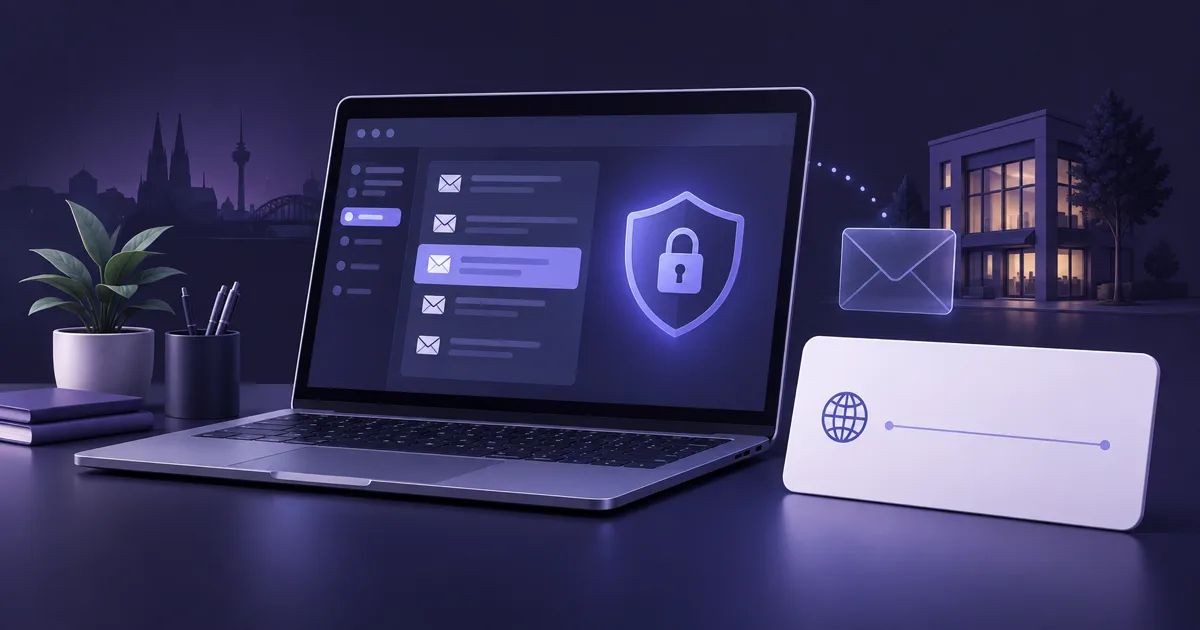
Why does a domain email address look more professional?
An address such as info@your-company.de shows that the business has a fixed digital identity. The domain appears not only on the website, but also in emails, quotes, invoices, business cards, vehicle lettering and the Google Business Profile.
Free email accounts are not automatically unprofessional, but they are weaker when trust matters. If a competitor replies with a clear domain address, clean signature and consistent website, the company looks more organised even before the actual service is compared.
Which email addresses does a small business really need?
Most small businesses need only a few clear addresses at the start. The important point is that every address has a purpose and is actually monitored. An info inbox must not become a black hole.
Separating personal communication from general enquiries keeps quotes, applications and support requests organised as the team grows. Aliases can forward to an existing inbox without creating a separate paid mailbox immediately.
- info@your-company.de for general enquiries
- name@your-company.de for personal customer communication
- invoice@ or accounting@ for documents and tax office workflows
- jobs@ for companies hiring staff
- emergency@ or booking@ only if actively monitored
How are email, domain and website connected?
Your email address is tied to your domain. If the website is your-company.de, emails should come from the same domain. German chambers of commerce explain this connection: domain, website and email address are parts of the same digital address. That is why the domain should belong to you, not sit vaguely with an old provider.
This becomes critical during provider changes. If website and email move without a plan, messages can be lost. Before a relaunch or migration, mailboxes, forwarding rules, DNS records and devices should be checked. In a website subscription, this coordination saves small businesses a lot of stress.
Which legal details belong in business emails?
In Germany, business emails are not just private messages. IHK guidance notes that many mandatory details from business letters can also apply to commercial emails. Depending on the legal form, this may include full company name, legal form, registered office, register court, register number and management.
A clean email signature is therefore more than politeness. It should include contact details, website, address and any required legal details. It does not replace the website Impressum, but it makes communication clearer. Short, correct and readable is better than a long legal block nobody understands.
- name and full company or provider details
- phone number, website and business address
- register court and number for corporations where required
- authorised representatives where required
- links to Impressum and privacy policy can be useful
How do you set up business email properly?
In daily use, three things matter: delivery, security and access on all devices. The domain needs correct MX records so messages reach the right mail server. SPF, DKIM and DMARC help receiving servers verify that a message is allowed to come from your domain.
Passwords and two-factor authentication also matter. A compromised email account can be dangerous: attackers can manipulate invoices, contact customers or trigger password resets. If several people need access, separate accounts or shared mailboxes are cleaner than one password on five phones.
What does a professional email address cost?
Basic mailboxes usually cost only a few euros per month, depending on provider, storage and groupware features. The real effort is often setup: DNS, migration of old messages, signatures, devices and spam protection.
For small businesses, the best solution is pragmatic: a few well configured addresses, clear forwarding, documented access and regular maintenance. With bezahlbare-webseite.de, website packages start at Starter €79, Business €149 and Premium €299 per month; domain and email setup can be planned together with the website.
Which business email mistakes should you avoid?
The most common problem is not the software but missing responsibility. Nobody knows who reads info@, old employee accounts stay active, forwarding points to private addresses or invoices land in spam.
Review your email setup once a year: which mailboxes exist, who has access, which forwarding rules are active, whether SPF/DKIM/DMARC work and whether signatures are still correct. This is digital hygiene, not a huge IT project.
Frequently asked questions
Does every business need its own email domain?
+Is Gmail or GMX forbidden for companies?
+What is better: info@ or a personal name?
+Do SPF, DKIM and DMARC have to be configured?
+Can email fail during a website move?
+Website subscription — from €79/month
Custom web design, German hosting, maintenance and personal support in one monthly package.
Book a free consultation