What belongs on a homepage? The 7 essential elements
For many small businesses, the homepage is the first real contact with a potential customer. It does not need to explain everything, but it must quickly answer three questions: am I in the right place, can I trust this company and what should I do next?
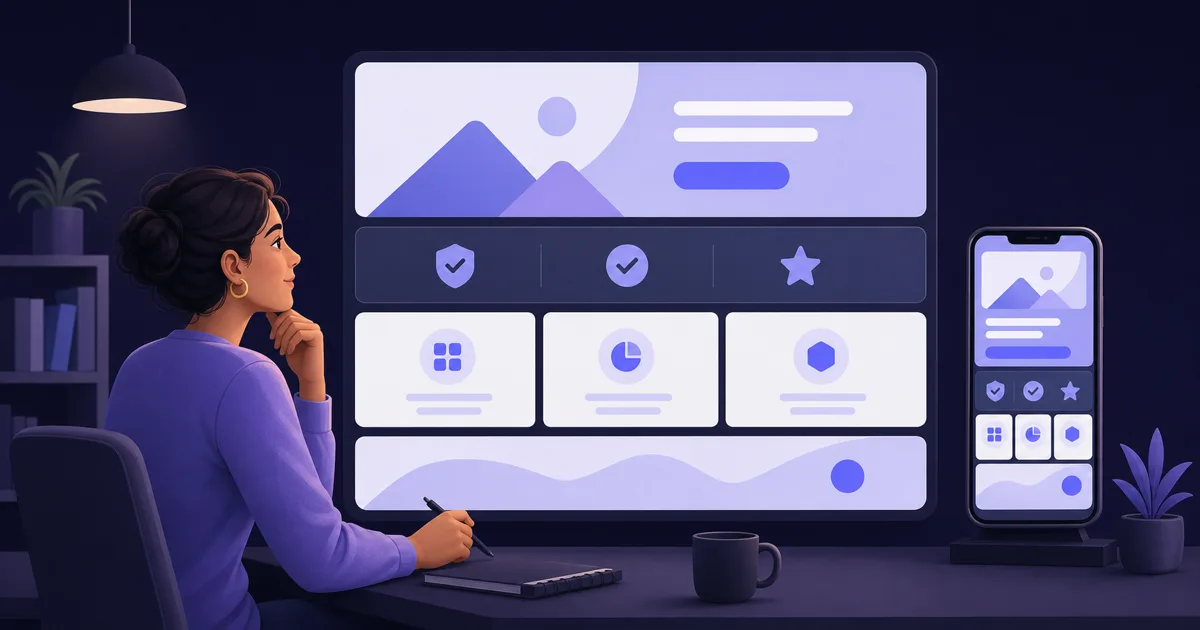
What should the first screen make clear?
The top section of a homepage should not be a puzzle. Visitors may come from Google, Maps, a referral or a business card. They need to understand what you offer, who it is for and where you work. A clear promise beats a vague slogan.
Use a specific H1, one short benefit sentence and a visible next step. A button such as “Request a free consultation” or “Schedule a callback” is clearer than “Learn more”. For many local businesses, the phone number should also be visible on mobile.
- specific service instead of a slogan
- audience or location where relevant
- main benefit in one sentence
- contact button or phone number clearly visible
Which services should appear on the homepage?
Show the most important services, not every detail. Three to six service blocks are usually enough. Sort them by customer logic, not internal departments.
Each block should include a short explanation and, where useful, a link to a dedicated service page. The homepage remains the overview; detailed search intent belongs on subpages.
Why are trust signals essential?
Small businesses win online through trust, not only through price. Visitors want to know whether the company is real, experienced and reachable. Reviews, references, project examples, certificates, qualifications, real team photos and opening hours all help.
Concrete proof is stronger than broad claims. “More than 40 websites managed for local businesses” is useful if it is true. Clear limits can also build trust because they reduce unsuitable enquiries.
- real reviews or testimonials
- references or work examples
- qualifications, certificates or industry experience
- team, contact person and reachable contact paths
Should prices be shown on the homepage?
Not every business can publish fixed prices. Still, a homepage should give some cost orientation where possible. Ranges, packages or starting prices reduce uncertainty and pre-qualify enquiries.
For website projects this is especially helpful because customers often fear hidden costs. Example: Starter from €79/month, Business €149, Premium €299; SEO from €69, Google Ads from €149, shop functionality plus €249 and booking plus €149. A short price anchor or a link to a pricing page can be enough.
Which contact paths and CTAs does a homepage need?
A homepage should make the next step easy. Depending on the industry, this may be a form, phone call, WhatsApp button, online booking or callback request. Explain what happens after the enquiry and how quickly you usually respond.
Keep first-step forms short. Name, contact method, topic and an optional message are often enough. Businesses handling sensitive data should avoid asking for unnecessary information in a general form.
- primary CTA in the top section
- repeat contact options after key sections
- brief note on response time or process
- keep forms as short as possible
Which legal basics must not be missing?
Legal information does not have to fill the homepage, but it must be easy to find. In Germany, business websites usually need an Impressum under § 5 DDG and a privacy policy when personal data is processed.
In practice, Impressum and privacy links belong in the footer on every page. External services such as Maps, YouTube, tracking or newsletters should be checked for consent and privacy requirements before they load.
How much content is enough for a homepage?
A homepage does not need to be endless. Clear sections usually work better than one huge text block: intro, services, benefits, trust, process, pricing or price link, short FAQ and contact.
The homepage should answer the main decision questions briefly. Detailed topics belong on service pages or guide articles. If a section becomes very long, it is probably a separate page.
Frequently Asked Questions
How many elements does a good homepage need?
+Does the legal notice have to be on the homepage?
+Should a homepage be long or short?
+Do I need prices on the homepage?
+What is the most common homepage mistake?
+Website subscription — from €79/month
Custom web design, German hosting, maintenance and personal support in one monthly package.
Book a free consultation