Maintain Your Website Yourself or Outsource It? A Realistic Effort Check
Maintaining your own website sounds sensible at first: you save money and stay independent. In everyday business, however, maintenance costs time, attention and a basic level of technical routine. The key question is not whether you can learn it. The question is whether it will reliably get done.
What does website maintenance actually include?
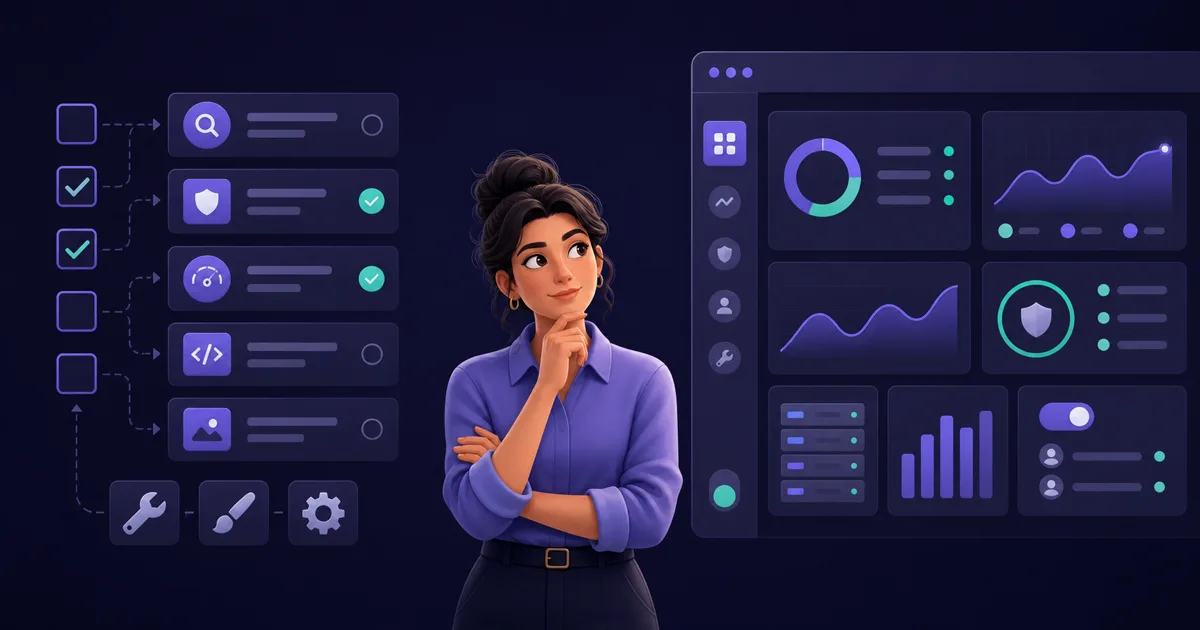
Website maintenance is more than uploading a new photo from time to time. Ongoing work includes content, technology, security, legal pages and checking whether inquiries really arrive. With WordPress, system, theme and plugin updates are added; with website builders, technical updates may be hidden, but content, legal texts, images and search signals remain your responsibility.
The German BSI generally recommends keeping software up to date and installing security updates promptly. For a business website that means: do not ignore updates for months, do not merely hope backups exist, and test after changes whether forms, phone links and the mobile view still work.
How much time does website maintenance take per month?
For a small business website with five to ten pages, a realistic estimate is two to four hours per month if nothing unusual happens. That includes checking updates, reviewing backups, testing a form, briefly checking loading speed and mobile layout, plus small content changes such as opening hours, team, prices or references.
Active websites take more. A blog post, new images, a service page or a seasonal campaign are not minutes of work; they can easily take one to three hours per change if copy, images, layout and mobile display should be clean. There is also the restart cost: if you only log in every few weeks, you need time to reorient yourself.
- Technical check and updates: 30 to 60 minutes per month
- Content updates: 1 to 3 hours depending on scope
- Form, email and smartphone test: 20 to 40 minutes
- Backup and security review: 20 to 40 minutes
- Troubleshooting: open-ended — from 15 minutes to half a day
Which tasks can you handle well yourself?
Self-maintenance works well for tasks where you are closer to the business than any service provider: new team members, changed opening hours, updated prices, project photos, short news or answers to common customer questions. Nobody knows your business better than you. If the CMS is set up properly, these changes should be possible without a developer.
The important part is a limited playground. Replacing text and images: yes. Moving design elements, installing plugins, adding tracking or copying legal notices: only if you know what you are doing. Many broken websites do not result from bad intentions, but from small experiments in the admin area.
When does self-maintenance become risky or expensive?
It becomes risky whenever security, privacy and technical stability are involved. Outdated plugins are a common attack path; Patchstack reported that 96 percent of WordPress vulnerabilities recorded in 2024 came from plugins. At the same time, harmless-looking changes can have consequences: a plugin update breaks the form, an 8 MB image slows the mobile page, or an embedded tool creates cookie and GDPR questions.
Legally, a website is not a one-time project either. Legal notice, privacy policy, cookie consent, embedded maps, fonts and analytics tools must match the actual website. Leaving old generator texts untouched for years saves time in the short term and builds risk in the long term.
What does outsourcing website maintenance cost?
Traditional maintenance contracts for small websites often range roughly from 30 to 150 euros per month, depending on whether they include only updates and backups or also content changes. Individual change requests are often billed by time. That can be fair, but it also means small updates are postponed for cost reasons — and the website slowly becomes outdated.
A managed subscription model calculates differently: at bezahlbare-webseite.de, websites start from €79 per month including hosting, maintenance, backups, monitoring and ongoing care within the agreed scope. Business is €149, Premium €299 per month. SEO can be added from €69, Google Ads from €149, online booking from €149 and shop functionality from €249. The advantage is predictability: one contact person and no hesitation over every small change.
Which hybrid approach often works best for small firms?
The best solution is often not either-or, but a clear split of responsibilities. You provide content from the business: new services, photos, prices, campaigns and expertise. The provider takes care of technology, security, structure, clean presentation and sensible publishing. The website stays current without turning you into a part-time web admin.
A simple editorial rhythm helps: once a month, spend ten minutes collecting what changed; once a quarter, review the key pages; once a year, run a larger website check. If someone internally is reliably responsible, self-maintenance can work. If the task always lands with the person who has the least time, outsourcing is usually cheaper than neglect.
Decision guide: maintain it yourself or hand it over?
Look at it as you would accounting or IT: is the task important, recurring and error-prone? Then it needs either a fixed internal process or external support. A website that should win customers cannot depend on chance.
Self-maintenance fits if you are technically confident, reserve time every month and can fix small errors yourself. Outsourcing fits if your website should generate inquiries, you do not want to deal with updates and GDPR details, or changes have historically taken weeks. Support is not the expensive part. The expensive part is a website that is online but no longer actively managed.
Frequently asked questions
Can I maintain my website completely myself?
+Which website tasks should I not do myself?
+What is cheaper: self-maintenance or managed support?
+How often should a business website be updated?
+Does a website subscription make sense if I rarely change content?
+Website subscription — from €79/month
Custom web design, German hosting, maintenance and personal support in one monthly package.
Book a free consultation