Website structure: why page architecture affects your rankings
Many small businesses start SEO with keywords. But the real issue often sits one layer deeper: the website is not structured clearly for users or Google. If services, locations and contact paths are mixed together, even good copy can perform below its potential.
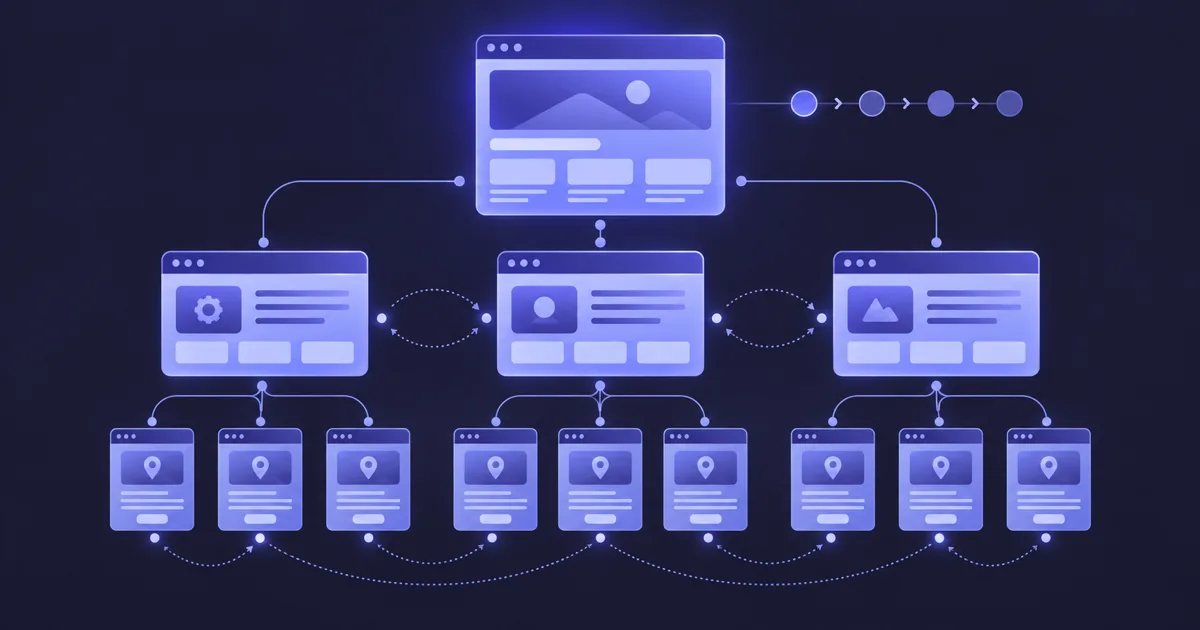
What does website structure mean for SEO?
Website structure means which pages exist, how they are named, how they link to each other and how quickly important content can be reached from the home page. Google Search Central regularly points to clear links, understandable navigation and crawlable pages as basics that help search engines discover and understand content.
For small companies, structure is also a sales issue. A visitor searching for a specific service does not want to guess through a generic home page. They need the right service page, proof, local relevance and a simple contact route.
Which pages does a small business really need?
A strong structure does not have to be large. Most companies need the right pages: home, service overview, individual service pages, about, references or reviews, contact, legal notice and privacy policy. Local businesses may add location pages when they contain real, useful content.
Separate pages by search intent. Someone looking for industry-specific web design expects different examples than someone comparing website costs. If everything sits on one page, topics compete with each other.
- Home page: orientation and main paths
- Service pages: one clear page per core service
- Contact page: phone, form, email, hours and location
- References or reviews: trust before the enquiry
- Legal pages: imprint and privacy policy easy to reach
Why are internal links a ranking lever?
Internal links are the signposts of your website. Google recommends links that help users and search engines understand the destination. Anchor text should therefore be descriptive, not just “click here”.
Important pages should not be hidden. Link core services from the navigation, the home page and relevant guide articles. This creates a logical network for users and helps Google understand relationships between topics.
How should URLs and navigation be built?
Short, descriptive URLs are easier to understand. An address such as /services/website-maintenance/ is clearer than /page?id=47. If URLs change, old addresses need redirects so that users and search signals are not lost.
Navigation should not make everything equally important. Five to seven main items are usually enough for small businesses. Breadcrumbs can also show where a page sits in the hierarchy; Google supports BreadcrumbList structured data for this.
What is better: one-pager or multiple pages?
A one-pager can work for a very simple offer: one service, one audience, one area. For SEO it quickly becomes limited because several search intents share one URL.
A multi-page website is not automatically better, but it provides structure. A cleaning company can separate office cleaning, stairwell cleaning and medical practice cleaning. Each page answers one concrete need. With a subscription model, this can start lean and grow later, for example with SEO from 69 euros per month.
Which structure mistakes cost enquiries?
The most common mistake is a nice home page without depth: big images but no concrete service pages. Another issue is important information hidden in PDFs, images or unclear sections. Contact options should also be visible without effort.
Duplicate or near-identical pages can also confuse search engines. Better create one clear main page per topic and support it with useful guide content. Check that every important page can be reached in two to three clicks.
How do you plan an SEO structure without technical chaos?
Start with a simple list: which services generate revenue, which questions customers ask before contacting you and which locations matter. Turn that into a sitemap before deciding design or technology.
For many small businesses, professional planning saves money. An affordable website is not the one with the fewest pages, but the one with the right structure. Our plans start at 79 euros per month, Business at 149 euros and Premium at 299 euros.
Frequently asked questions
How many subpages does a small business website need?
+Is a flat site structure better for Google?
+Does every service need its own page?
+Are breadcrumbs required?
+Should I change old URLs for a cleaner structure?
+Website subscription — from €79/month
Custom web design, German hosting, maintenance and personal support in one monthly package.
Book a free consultation